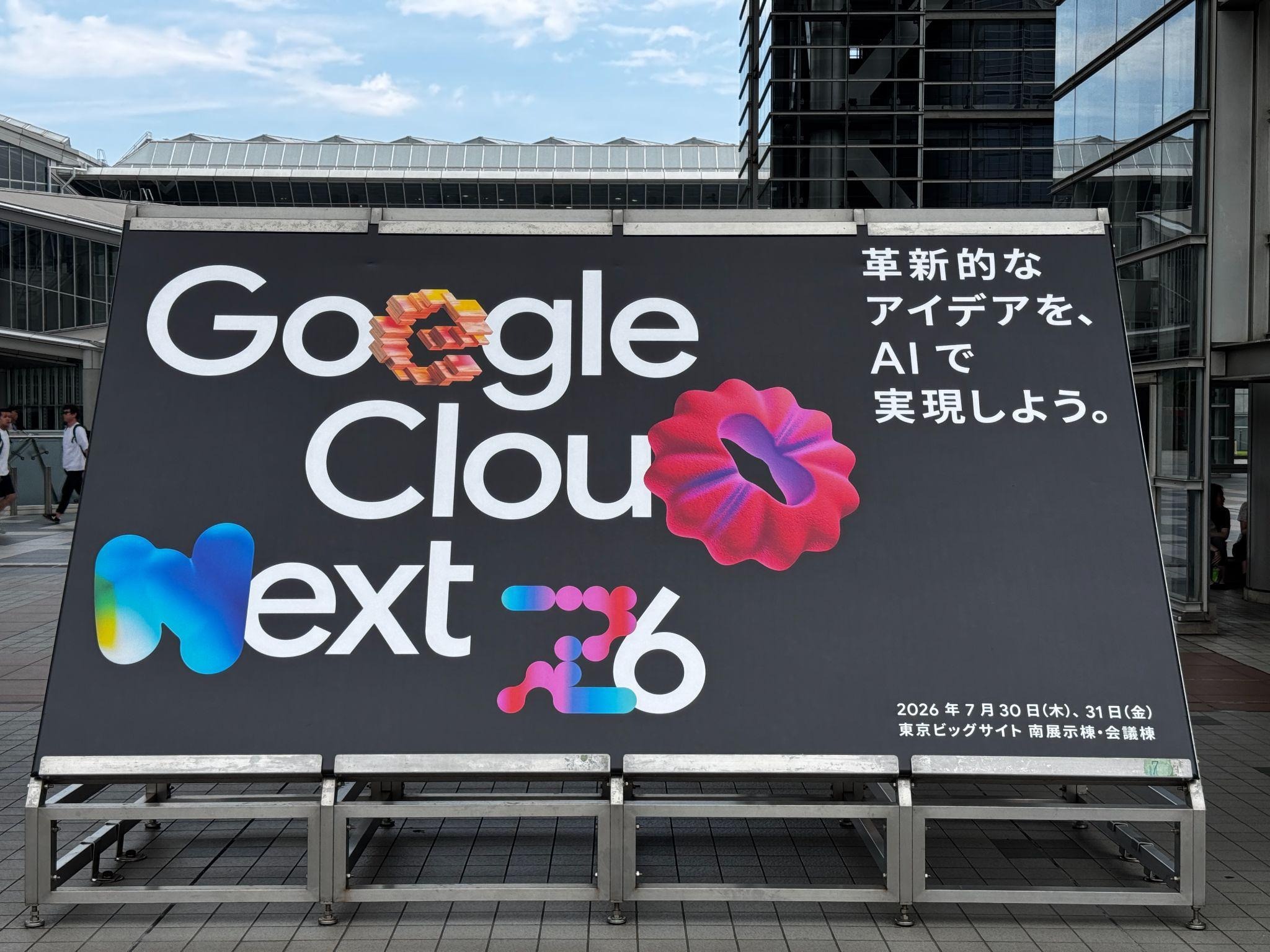
From 30–31 July 2026, I returned to Tokyo Big Sight for Google Cloud Next Tokyo ’26. Last year’s event was filled with new AI applications and demonstrations that made the future feel as if it had arrived all at once.
This year, there were fewer moments that made me stop and think, “I have never seen this before.” But that does not mean the event lacked value.
If 2025 was the year Google showed us what AI could do, 2026 was the year it began showing us where those capabilities could be used in the real world.
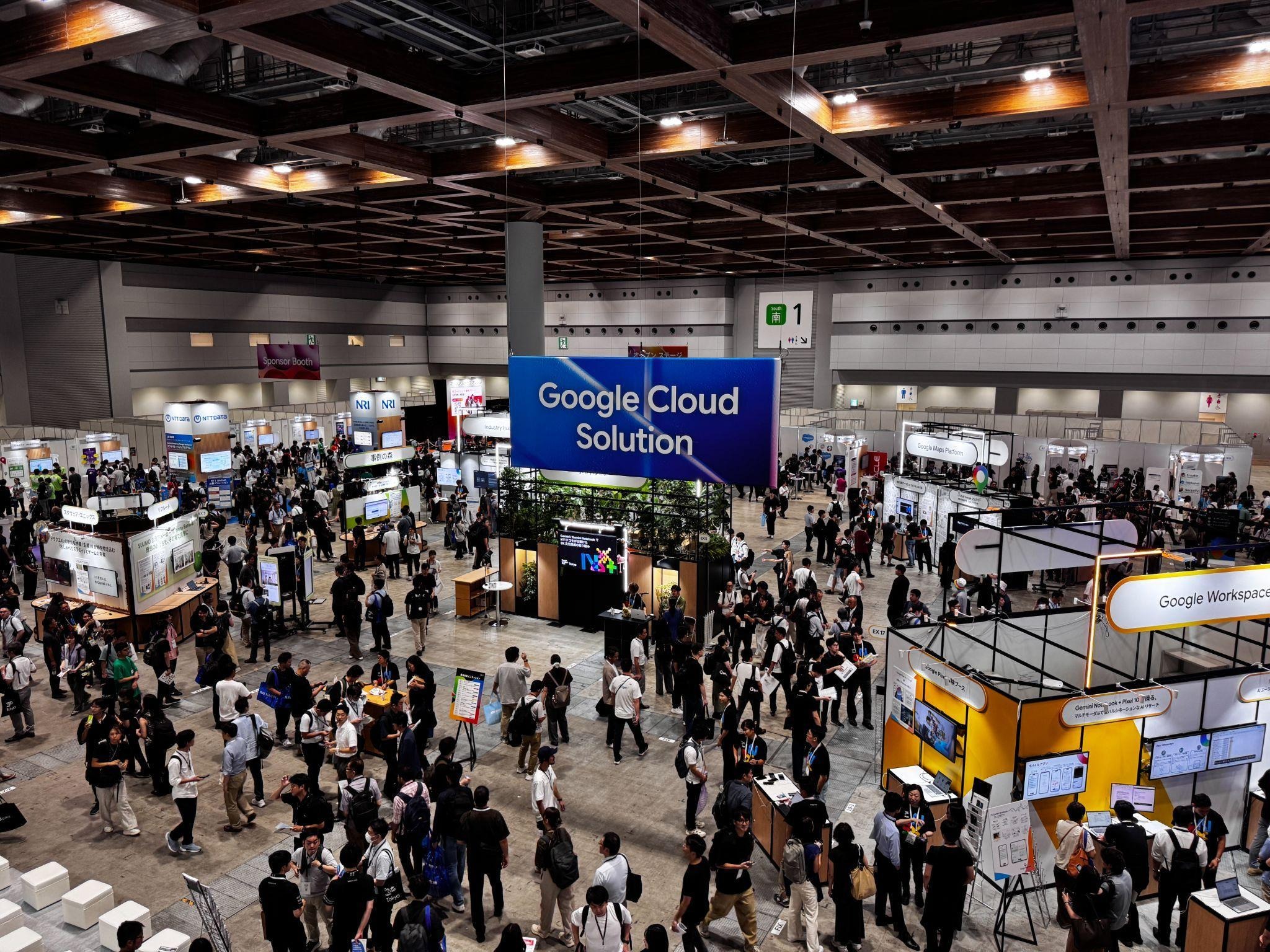
Google Cloud NEXT is not just about new announcements. It is also a chance to see where the industry is heading. This year, the most interesting exhibits were not necessarily the most futuristic; they were the ones that could make everyday work easier, safer or faster.
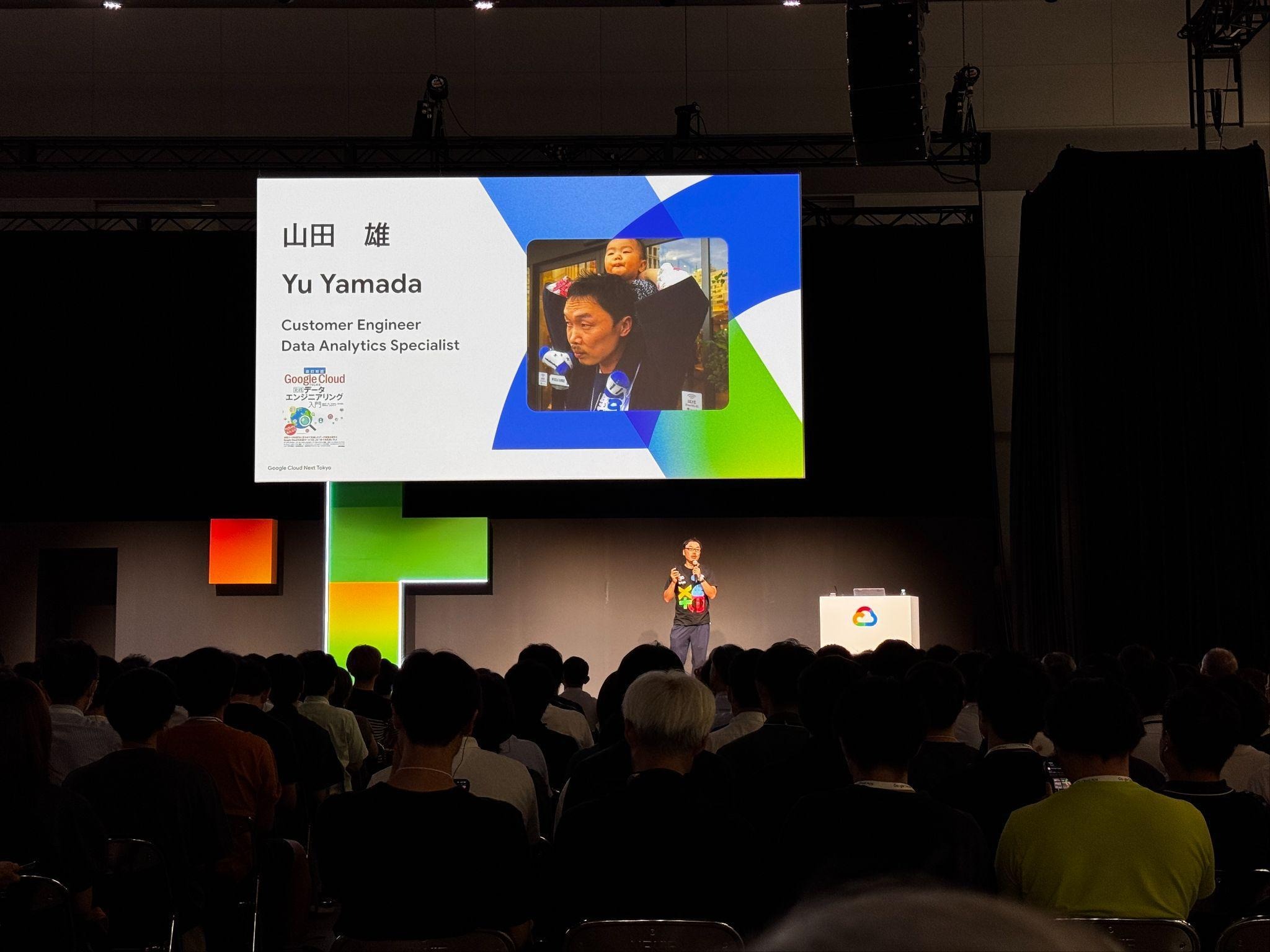
In a session on the future of BigQuery, Yu introduced several ways Google is helping AI understand and analyse business data.
The session also reinforced something I often see in my work: AI cannot analyse information that was never collected, nor understand a business rule that was never clearly defined.
1.1. BigQuery Measures - Defining KPIs Before Asking AI
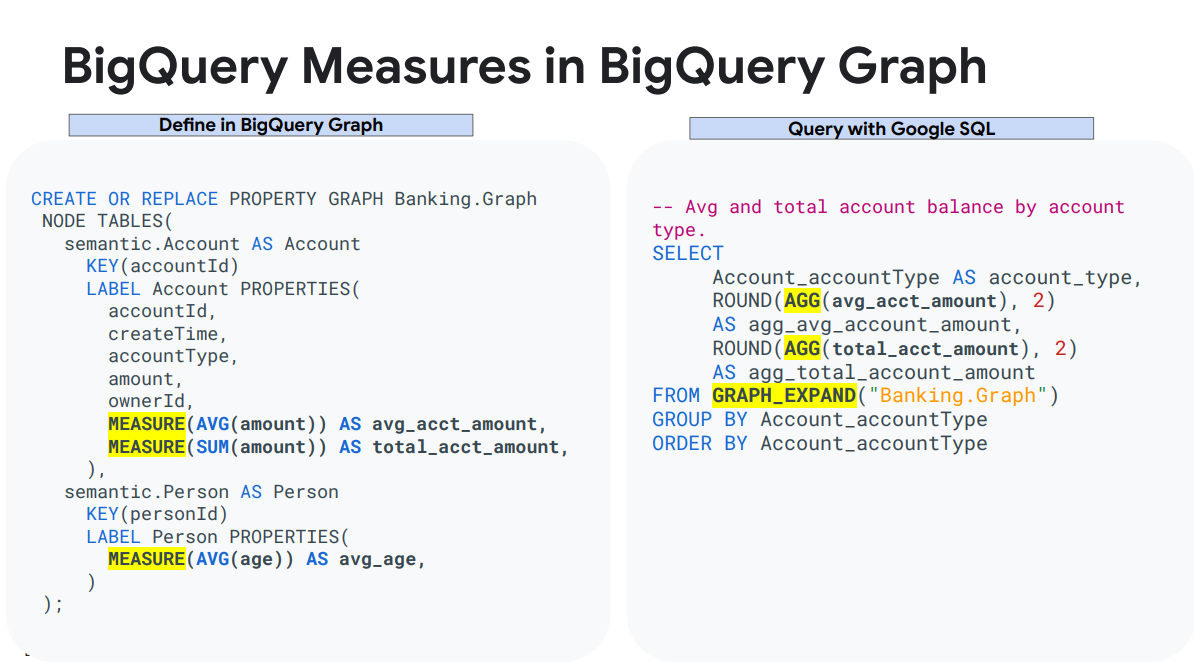
Different teams can calculate the same KPI differently. For example, one team may count an order when it is submitted, while another counts it only after payment is confirmed.
BigQuery Measures allows a company to define one calculation that can be shared by its analysts, dashboards and AI tools. Before asking AI to calculate a conversion rate, however, we must still decide what qualifies as a conversion and when it should be recorded. AI does not replace measurement design; it makes clear and consistent definitions even more important.
1.2. Structured Data Insights - Making Data Easier to Understand
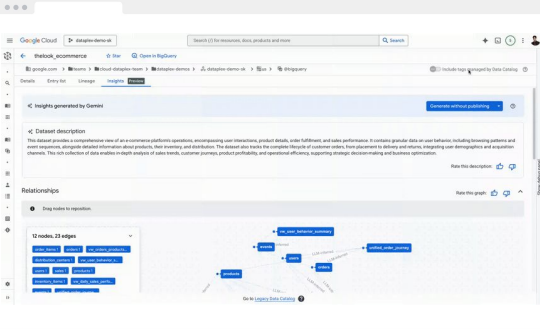
In many organisations, a table or column name is clear only to the person who created it. Structured Data Insights uses Gemini to add descriptions, summarise datasets and suggest how different tables may be connected.
This could help teams find and understand the right data more quickly. However, AI-generated descriptions cannot replace clear naming rules, documentation and ownership.
AI can explain what the data means, but good measurement design ensures that the right data exists in the first place.
1.3. AI Functions – Turning Unstructured Information into Usable Data
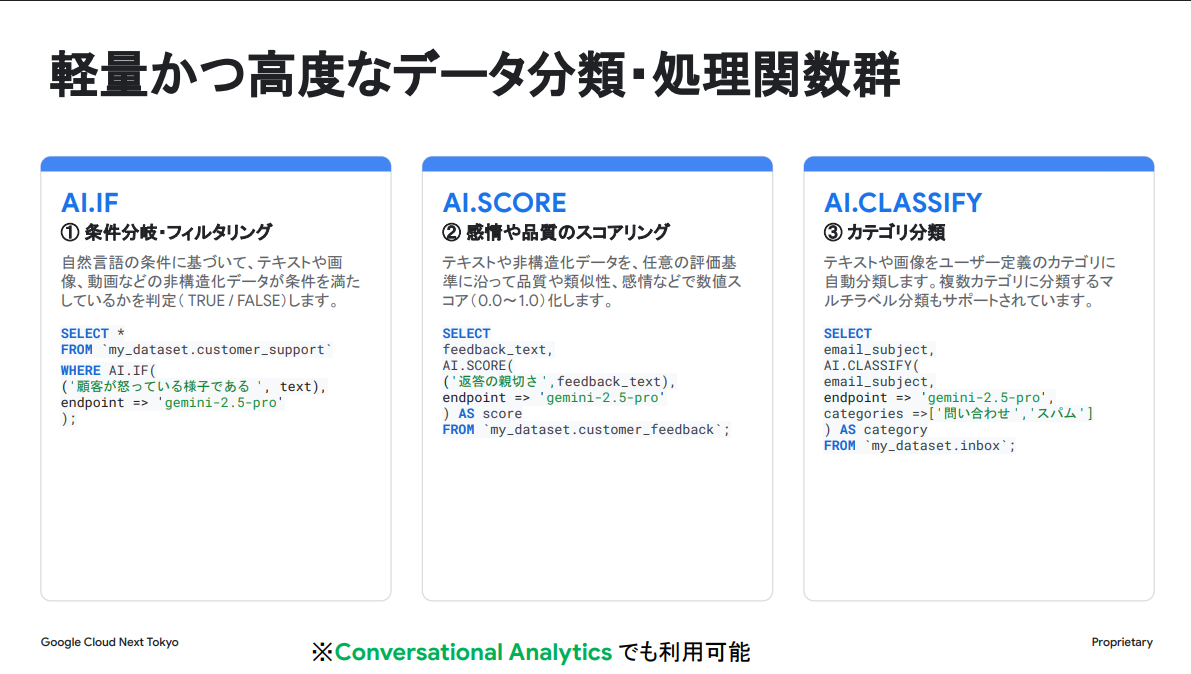
Companies hold large amounts of useful information in customer emails, feedback, images and documents. Traditionally, reviewing and organising this content required considerable manual effort.
BigQuery’s new AI functions can make this information easier to analyse. AI.IF can filter content based on a natural-language condition, such as identifying messages from angry customers. AI.SCORE can rate feedback by sentiment or quality, while AI.CLASSIFY can automatically organise emails or documents into selected categories.
This could help businesses analyse information that previously sat outside their standard reports. However, people must still define the right categories and review the results carefully.
AI can organise information at scale, but reliable analysis still begins with clear definitions and quality checks.
Beyond Yu’s session, there were many other demonstrations across the expo.
I would like to share four that best represented this shift from AI experimentation to practical use.
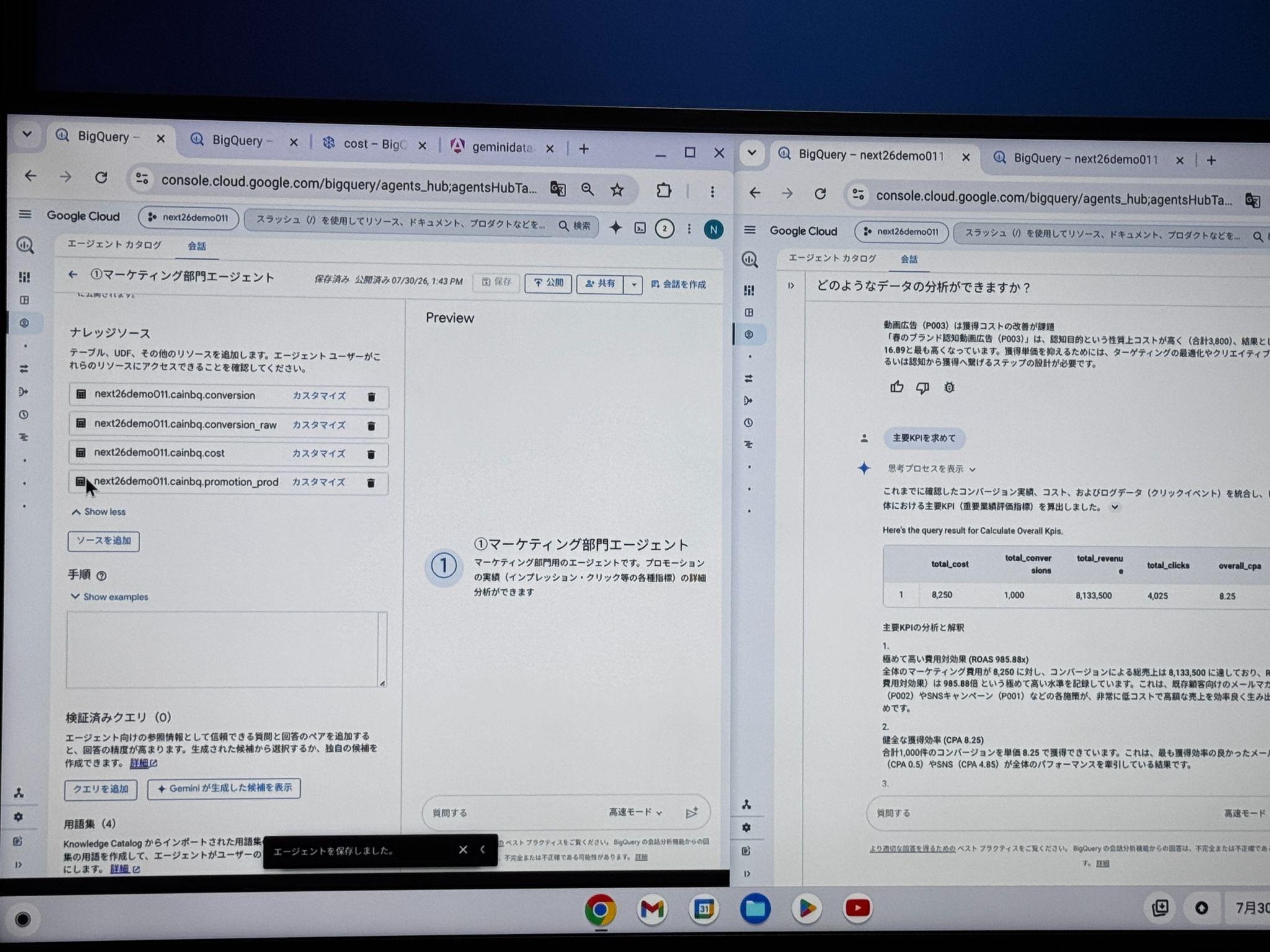
For years, analysing data in BigQuery has usually required someone who knows how the tables are structured and how to write SQL. Gemini has already been able to assist with writing or improving queries, but Conversational Analytics takes the idea further.
Instead of asking AI how to write a query, you can now ask questions directly about the data stored in your BigQuery tables.
For details of Conversational Analytics, you may also refer to my teammate's article here: https://ayudante.jp/column/2026-06-05/13-00/ (Japanese Version only)
In the demonstration, a marketing analytics agent was connected to tables containing campaign costs, conversions, revenue and other performance data. A user could ask for the main KPIs in ordinary language, and the agent would calculate the results, present them in a table and explain what they meant.
For example, it could identify a campaign with an unusually high acquisition cost, compare performance across channels, or suggest where further investigation might be needed. You could also ask it to check a table for missing or inconsistent information and suggest improvements.
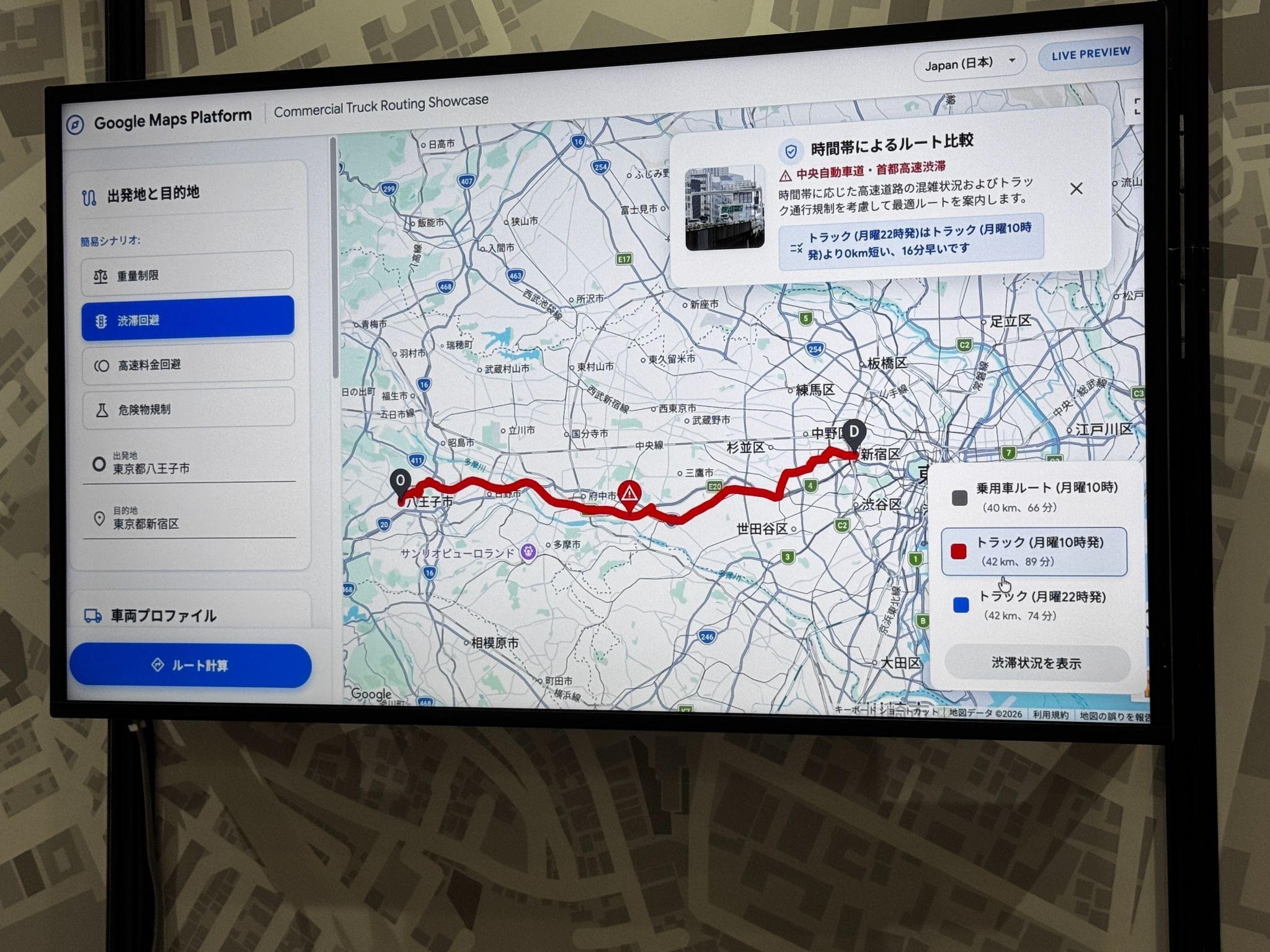
Anyone who has driven in Japan knows that the fastest route on a map is not always the easiest road to use. For a large commercial truck, that difference can become a serious safety and operational problem.
A normal navigation route may lead a driver towards a narrow street, a low bridge or a road with vehicle restrictions. Google Maps Platform’s Large Vehicle Routing is designed to calculate routes that are more suitable for the truck itself.
The system can consider the vehicle’s size and weight, traffic at different departure times, toll-road preferences and restrictions on carrying hazardous materials. Rather than selecting a route designed for an ordinary passenger car, it can keep a large vehicle on roads that it can use more safely.
This is not simply navigation with a larger vehicle icon. It is route planning that understands that a truck has different limitations from a car.
The exhibit presented potential improvements of 35% in delivery efficiency and 15% in estimated arrival-time accuracy. Actual results will naturally depend on the operator and its routes, but the business purpose is clear: fewer unsuitable roads, more reliable arrival times and safer deliveries.
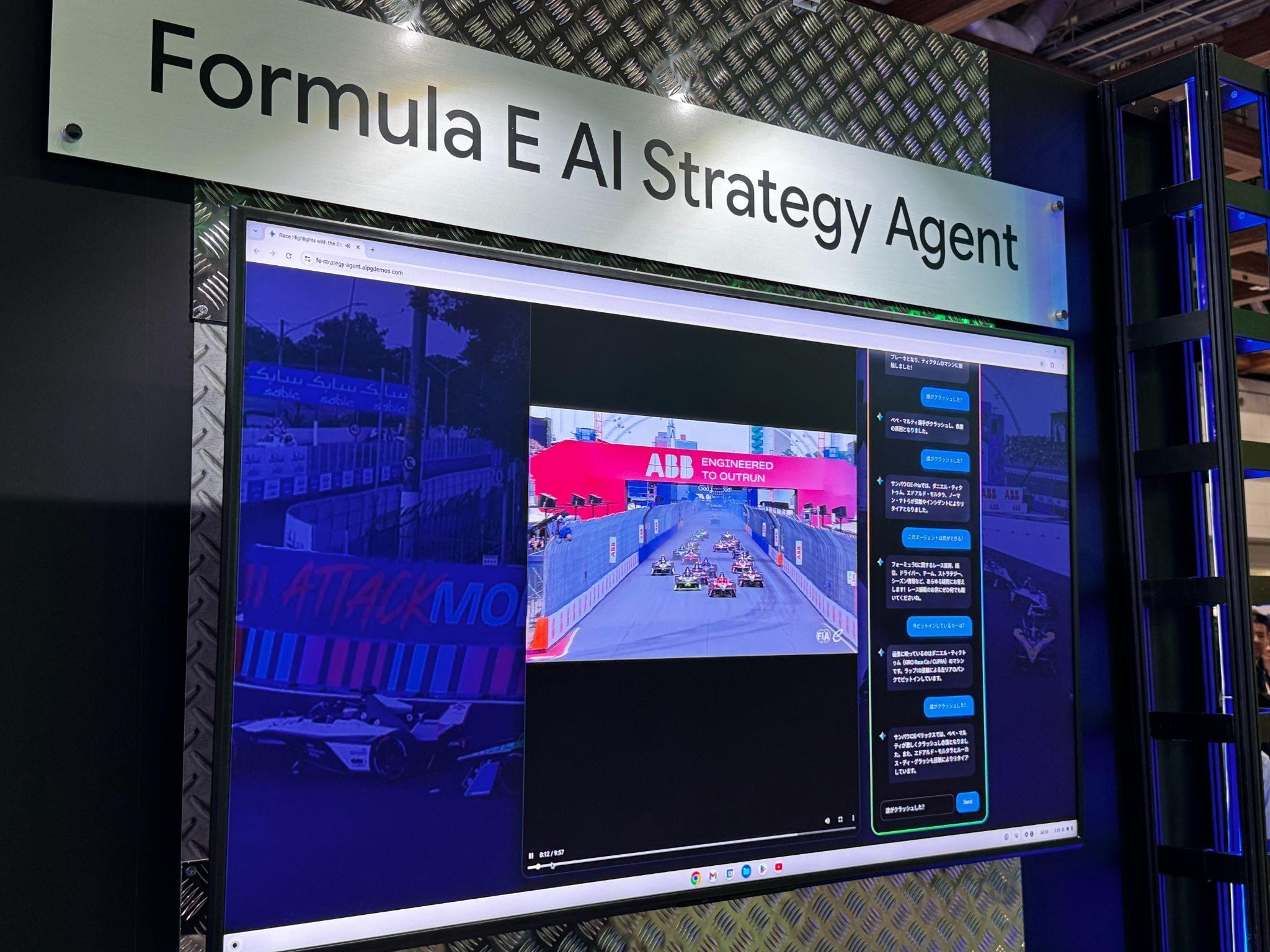
Motorsport has attracted growing global attention, but it can still be difficult for a new viewer to follow. A race involves flags, penalties, energy management, safety cars and strategic decisions that may not be obvious from the pictures alone.
The Formula E AI Strategy Agent lets viewers ask questions during a race, explaining what happened, why it matters and how it could affect the result. For a first-time viewer, it could turn confusing action into an understandable strategy.
I am a football fan, but I sometimes get a headache when trying to explain the offside rule to my wife (especially during the FIFA World Cup this year). The basic idea sounds simple until a real incident involves the timing of a pass, the position of several players, a deflection or a VAR review.
Imagine being able to ask during a broadcast: “Why was that goal ruled out?” The system could identify the relevant moment, explain the offside decision in plain language and show what the officials were reviewing.
Google has not announced a similar experience for football, but I would be interested to see whether a similar experience eventually appears in the Premier League, UEFA Champions League or a future FIFA World Cup.

The final example came from TBS and VIVANT, one of Japan’s major television dramas. Season 2 is currently airing, with Episode 8 arriving this week as I write this article in September 2026.
The exhibition presented how Google Cloud’s generative AI tools are being incorporated into the programme’s production workflow. Production materials are first provided as inputs. Nano Banana and Veo 3 can then help generate or develop visual content before the production team completes the VFX compositing, finishing and final edit.
This does not mean that the entire drama is generated by AI. The more important point is that generative AI is now mature enough to support a professional television production alongside conventional creative and post-production work.
Only a short time ago, AI-generated video was mostly associated with experimental clips shared online. Seeing it connected to a major TBS production shows how quickly the technology is moving from demonstration to adoption.
For the television industry, this could help production teams explore visual ideas, prepare effects and create scenes that would otherwise require more time or resources. The creative judgement still comes from people, but the set of tools available to them is expanding.
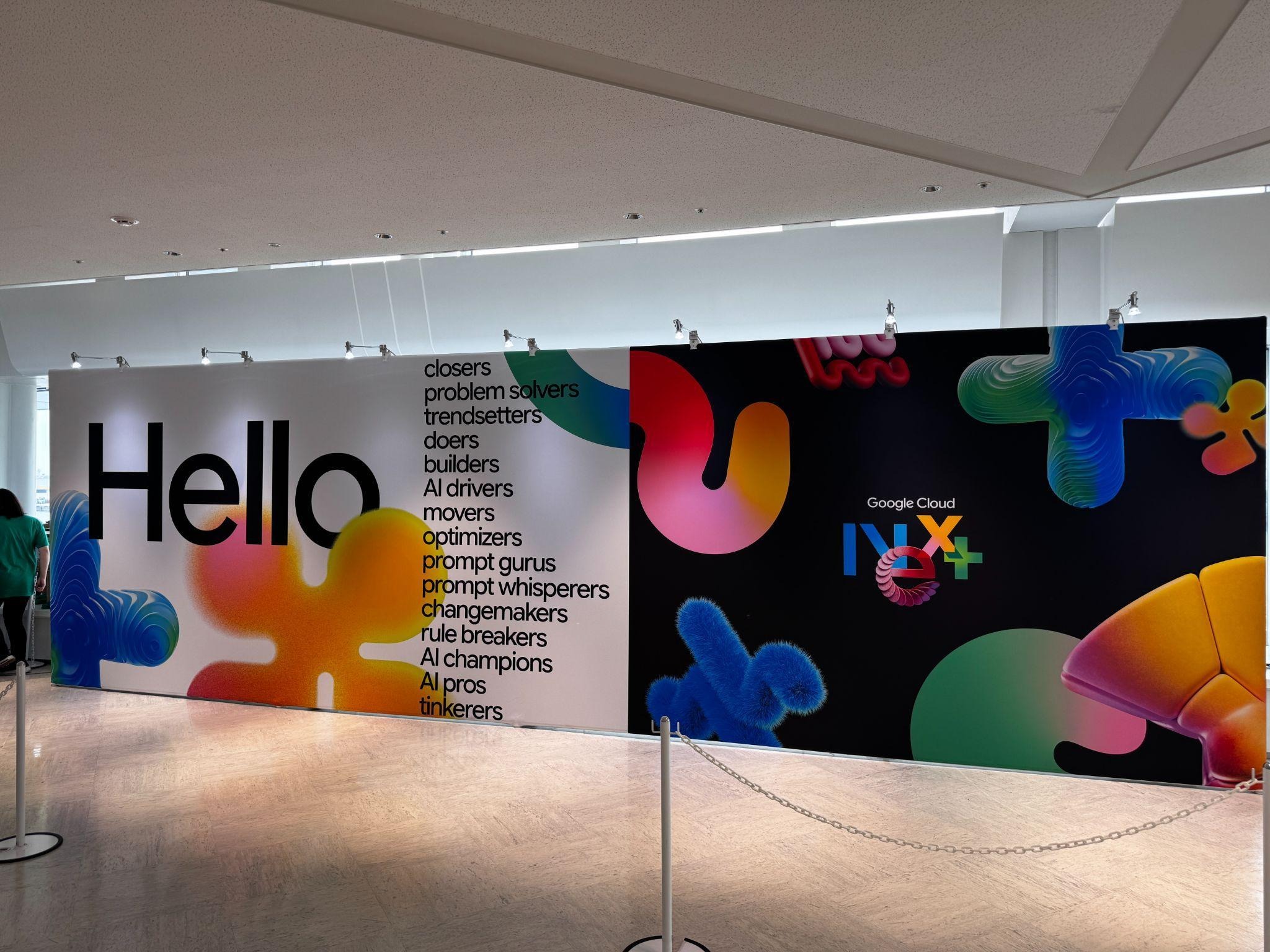
Compared with 2025, Google Cloud Next Tokyo ’26 did not give me the same sense of surprise. Last year introduced many new AI applications; this year often felt like the next chapter of the same story.
But perhaps that is exactly the point.
A technology does not prove its value when it produces an impressive demonstration. It proves its value when analysts, logistics operators, sports broadcasters and television producers can apply it to their everyday work.
Conversational Analytics is bringing business users closer to their data. Large Vehicle Routing is adapting navigation to the realities of commercial transport. The Formula E agent is helping new audiences understand a complicated sport. Nano Banana and Veo 3 are entering a professional television workflow.
None of these ideas is as dramatic as the first arrival of generative AI. Yet together, they show something more important: AI is becoming less of a separate attraction and more of a practical layer within products, services and industries.
Last year was about asking, “What can AI create?”
This year was about asking, “Where can we actually use it?”
That may be less exciting on the surface, but it is also how technology begins to become real.
In closing, thank you very much for taking the time to read this article.